


Wednesday, 1 June, 2011 — Monthly Climate Summary for Australia — Product Code IDCKGC1A00
Australia in May 2011
Temperatures Rainfall Extremes Important notes the top
In Brief
Rainfall was generally below or near average across Australia, with a few small areas recording above average falls. Temperatures were cooler than normal during both the day and night in most parts of the country.
Temperatures
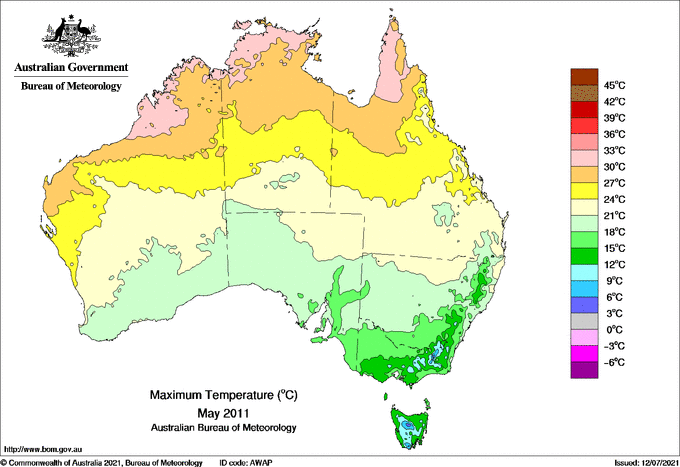
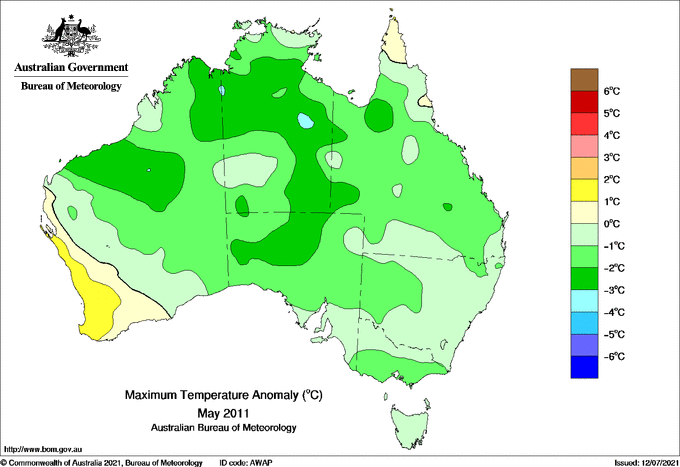
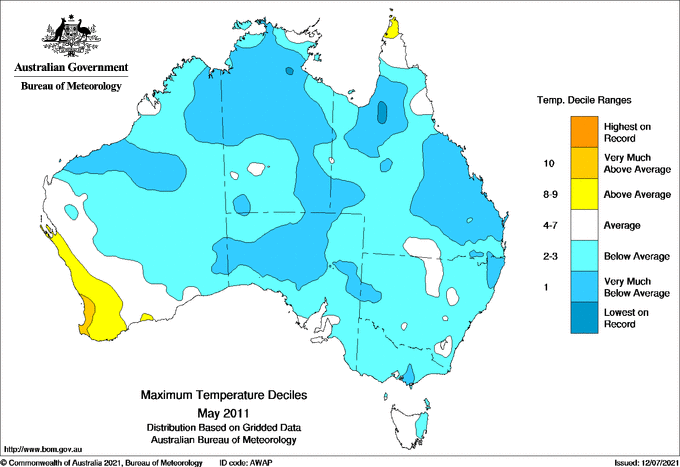
Maximum temperatures were 1.33 °C below normal (7th lowest on record), the coolest since 2000. All states and territories recorded below average daytime temperatures. The most significant cool anomalies were experienced across the central Northern Territory and the Pilbara region of Western Australia, with maximum temperatures up to 4 °C below normal.
Warmer than average daytime temperatures were only experienced in the southwest corner of Western Australia (up to 2 °C warmer than normal), and the tip of Cape York in Queensland. Temperatures across Tasmania remained fairly close to normal.
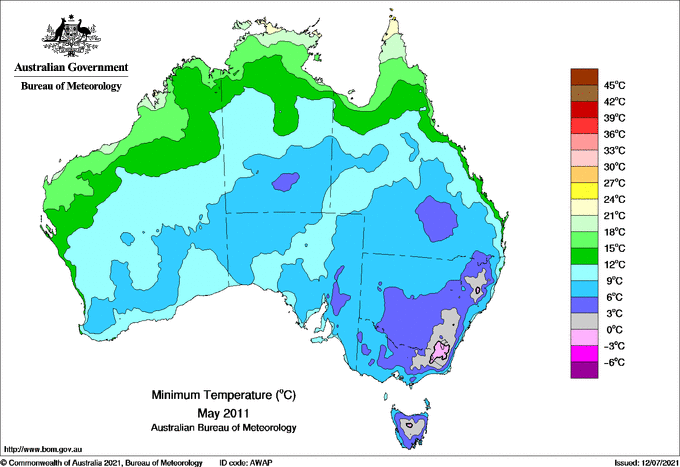
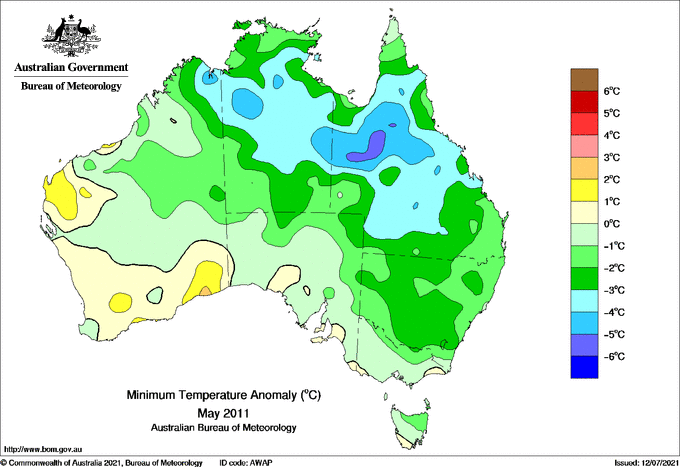
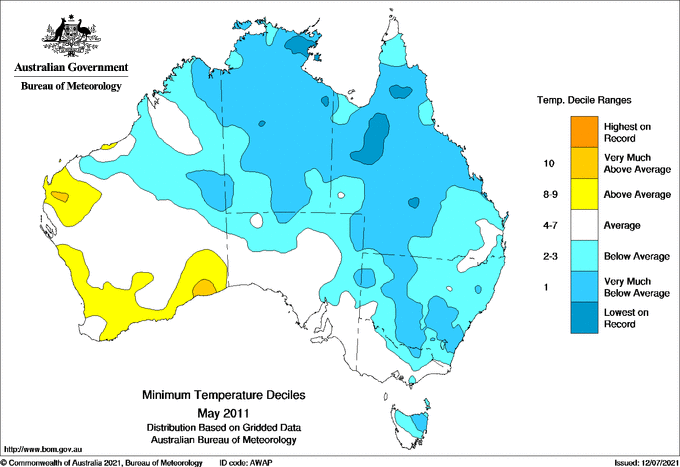
Nationally, minimum temperatures were 1.75 °C below normal (3rd lowest on record). Northern Australia was significantly cooler than average, with parts of central Queensland up to 6 °C cooler than normal. Both Queensland and the Northern Territory recorded their second lowest May minimum temperature on record. The western third of Western Australia was warmer than average, as were small areas along the south coast of Australia.
| Areal average temperatures | ||||||
|---|---|---|---|---|---|---|
| Maximum Temperature | Minimum Temperature | |||||
| Rank (out of 62) |
Anomaly* (°C) |
Comment | Rank (out of 62) |
Anomaly* (°C) |
Comment | |
| Australia | 7 | −1.33 | Lowest since 2000 | 3 | −1.75 | Lowest since 1976 |
| Queensland | 7 | −1.21 | Lowest since 2000 | 2 | −3.05 | Second lowest on record; Record − 3.11 (2001) |
| New South Wales | 12 | −0.66 | Lowest since 2000 | 4 | −2.05 | |
| Victoria | 10 | −0.96 | Lowest since 1970 | 16 | −0.82 | |
| Tasmania | 27.5 | −0.06 | 37.5 | +0.06 | ||
| South Australia | 5 | −1.64 | Lowest since 1979 | 23 | −0.36 | |
| Western Australia | 10.5 | −1.11 | Lowest since 2000 | 14 | −0.70 | |
| Northern Territory | 5 | −2.19 | Lowest since 2000 | 2 | −3.14 | Second lowest on record; Record − 3.42 (1976) |
*Anomaly is the departure from the long-term (1961-1990) average.
| Temperature maps | |||
|---|---|---|---|
| Mean | Anomaly | Deciles | |
| Mean daily maximum temperatures |
 |
 |
 |
| Mean daily minimum temperatures |
 |
 |
 |
Temperatures Rainfall Extremes Important notes the top
Rainfall
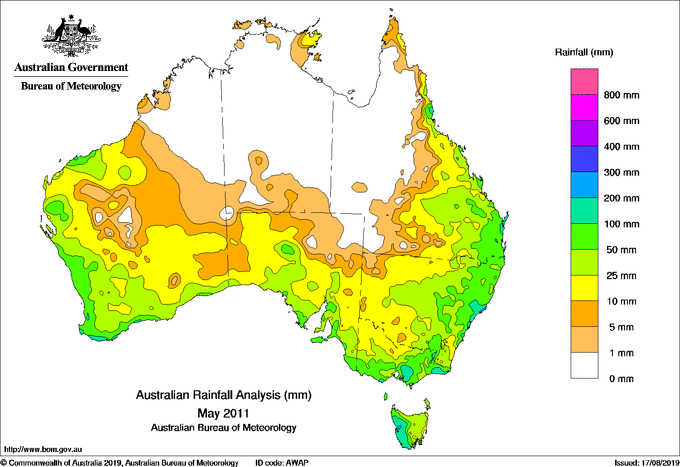
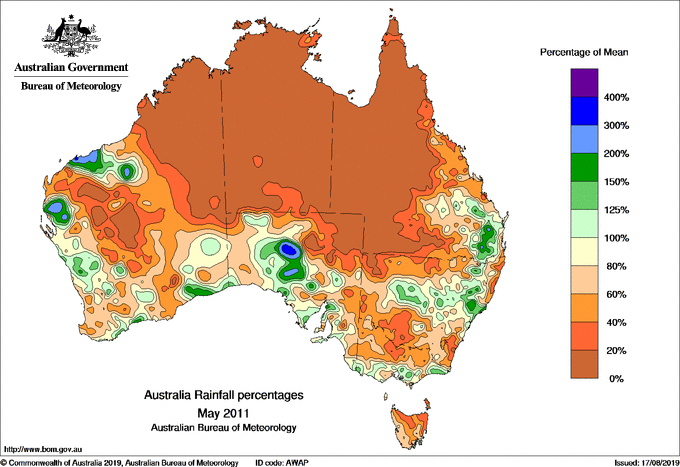
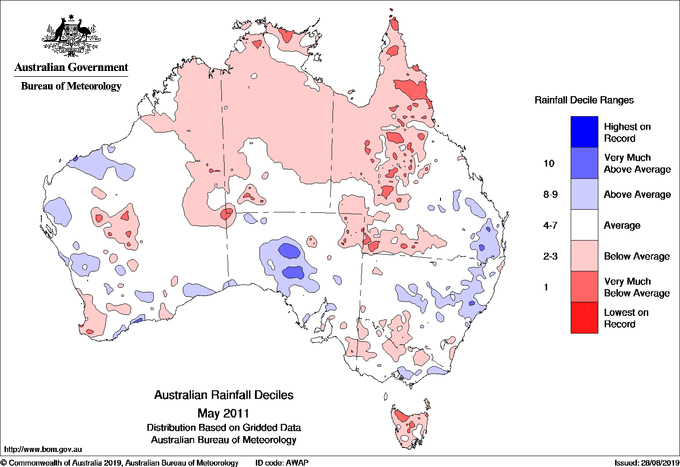
Rainfall averaged over Australia was 46% lower than normal (25th driest out of 112 years of record). May 2011 is the first month with below average rainfall for Australia as a whole since June 2010. All states and territories recorded lower than their mean rainfall.
Higher than average falls were recorded in central South Australia and in small patches along the central east coast of Australia and parts of Western Australia. Below average rainfall was recorded across much of northern Australia, especially in the Arnhem region of the Northern Territory and across Cape York in Queensland. Little to no rainfall fell in these regions. Southwest Western Australia, northern Victoria, Tasmania and the Riverina districts in NSW also received below average rainfall.
| Areal average rainfall | ||||
|---|---|---|---|---|
| Rank (out of 112) |
Average (mm) |
Departure from mean* |
Comment | |
| Australia | 25 | 15.4 | −46% | |
| Queensland | 33 | 12.0 | −61% | |
| New South Wales | 55 | 33.2 | −30% | |
| Victoria | 45 | 46.3 | −29% | |
| Tasmania | 13 | 71.2 | −48% | |
| South Australia | 61 | 17.1 | −20% | |
| Western Australia | 31 | 14.7 | −43% | |
| Northern Territory | 20 | 0.9 | −94% | |
| Murray-Darling Basin | 51 | 27.7 | −34% | |
*The mean is calculated for the 1961-1990 reference period.
| Rainfall maps | |||
|---|---|---|---|
| Totals | Percentages | Deciles | |
| Total rainfall |
 |
 |
 |
Temperatures Rainfall Extremes Important notes the top
| Australian weather extremes in May 2011 | |
|---|---|
| Hottest day | 35.1 °C at Wyndham (WA) on the 3rd |
| Coldest day | −4.6 °C at Thredbo (NSW) on the 11th |
| Coldest night | −9.0 °C at Woolbrook (NSW) on the 15th |
| Warmest night | 27.1 °C at Troughton Island (WA) on the 10th |
| Wettest day | 122.0 mm at Katoomba (NSW) on the 31st |
Temperatures Rainfall Extremes Important notes the top
Notes
The Monthly Climate Summary is prepared to list the main features of the weather in Australia using the most timely and accurate information available on the date of publication; it will generally not be updated.
This statement has been prepared based on information available at 2pm EST on Wednesday 1 June 2011. Some checks have been made on the data, but it is possible that results will change as new information becomes available, especially for rainfall where much more data becomes available as returns are received from volunteers.
Long-term averages in this statement and associated tables are for the period 1961 to 1990 unless otherwise specified.
In the tables, fractional ranks denote tied values.
A new area-averaging method was adopted for rainfall in May 2009. Current and historical totals for Tasmania are substantially higher than under the old scheme, but differences for other states, and nationally, are negligible. The rankings and departures from mean shown here use the new method.
Further information
- Media
- media@bom.gov.au (03) 9669 4057
- Enquiries
- helpdesk.climate@bom.gov.au
 Unless otherwise noted, all maps, graphs and diagrams in this page are licensed under the Creative Commons Attribution 4.0 International Licence
