
From satellites orbiting Earth, to weather balloons released into the atmosphere, meteorological observations drive everything from our daily routines to planning for the future.
This year’s World Meteorological Day theme is Observing Today, Protecting Tomorrow, and we are highlighting our dedicated specialists who make accurate observation data and weather forecasts possible.
Video: The Bureau celebrates World Meteorological Day 2026
Through the World Meteorological Organization, countries share weather data and knowledge. This helps communities to prepare, respond, and stay safe when it matters most. By observing the weather and climate today, we can protect tomorrow.
Behind the forecast
Global observations and advanced models form the backbone of modern forecasting, but it’s the skilled specialists, including our meteorologists, hydrologists, climatologists, oceanographers, and communicators who bring this information to life.
Bureau of Meteorology CEO Dr. Stuart Minchin understands that the BOM holds a privileged place in the hearts and minds of many Australians.
“We are fortunate to have an expert and highly dedicated workforce committed to providing the best possible service to the Australian community,” Dr Minchin said.
“Our forecasters draw on years of training to translate complex model guidance and real-time observations into clear information that Australians rely on.”
These human insights are essential in shaping forecasts, warnings and tailored advice for emergency services, aviation, maritime operations, agriculture, space, defence, energy and resources, and the broader community.
Tasmanian-based Meteorologist Luke Johnston reflects on his career as being extremely rewarding.
“It's a job that enables me to use my science-oriented brain to make sense of complex information from a number of sources, then communicate it in a way that helps others,” Mr. Johnston said.
“I get to think about things as small as what impacts might come from frost forming in a particular valley, as important as the chances of a helicopter being used for fire agencies because of turbulence, or helping Tasmanian Emergency prepare and update a response plan for something as big as a tsunami event.”
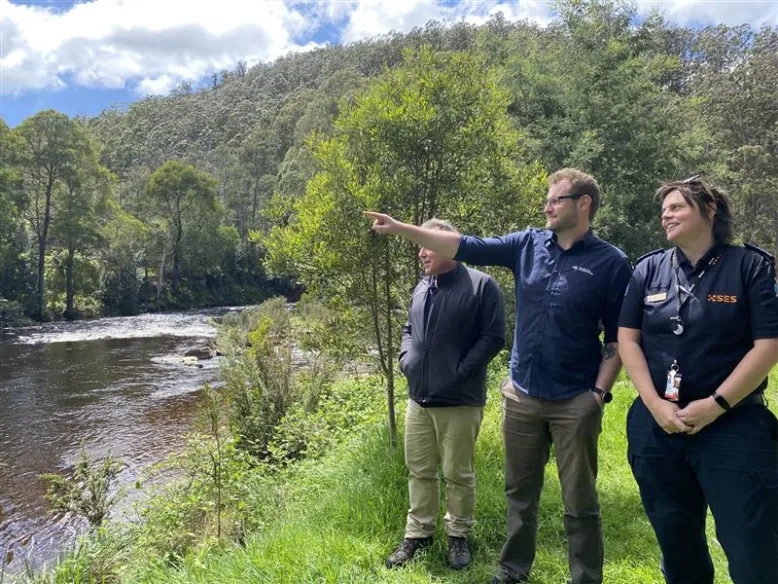
Meteorologist Luke Johnston working with Tasmania State Emergency Service (SES)
Strengthening global links to protect communities at home and abroad
Australia’s weather and climate services are deeply connected to global observing systems.
Through the World Meteorological Organization (WMO), we share data, expertise, and technology with more than 190 countries.
Senior Manager, Satellite Earth Observations Planning and Coordination, Agnes Lane recognises that by exchanging observational data with other nations, we help communities make decisions that safeguard livelihoods and save lives.
“Thanks to our World Meteorological Organization membership, we have free access to data from around 30 satellites, including those operated by Europe, the US, Japan and India,” Ms. Lane said.
“The Bureau uses satellite data from our international partners for weather forecasts and warnings, as well as in the advice we provide to the Australian community, emergency services and industries every day.
“We receive data from Japan's Himawari satellite every 10 minutes and, through a special arrangement, we can also request data every two and a half minutes. We use this near real-time data to monitor and respond to natural disasters – not just for Australia but for the whole Pacific region.”
Supporting Pacific nations through better observations
The Bureau continues to support the Weather Ready Pacific (WRP) initiative, a long‑term effort to strengthen early warning systems and climate resilience across the Pacific.
Improved observations help protect homes, livelihoods, and cultural heritage across island nations.
Our specialists provide hands‑on training, infrastructure guidance, and operational support to meteorological services in Fiji, Kiribati, Samoa, the Solomon Islands and beyond.
General Manager of International Development, Dr Andrew Jones said the WRP program supports the Pacific region in benefiting from advances in forecast and warning systems for weather, hydrological and oceanic events, enabling increased accuracy specificity and lead times of forecasts.
“Climate change escalates the Pacific's risks to extreme events by increasing their intensity and/or frequency,” Dr Jones said.
“The Bureau supports Pacific meteorological leaders in providing technical guidance and advice to ensure that every Pacific Island person will be safer from severe weather and the impacts of climate change.”
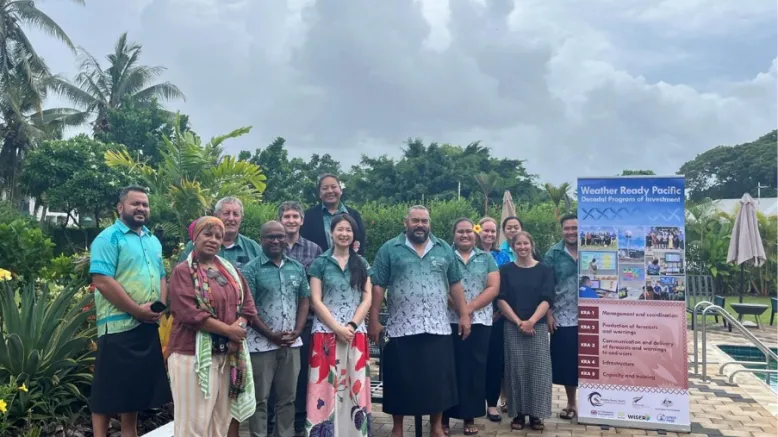
Secretariat of the Pacific Regional Environment Programme (SPREP) Weather Ready Pacific (WRP) Programme Management Unit with the Bureau and other technical agencies, Apia, Samoa
Every day, everywhere
From technicians maintaining remote weather stations, to forecasters advising emergency management services, our people are united by a shared purpose: to be there for all Australians, when it matters most.