
As a storm-chasing fanatic, photographer Kane McLatchie has seen and photographed countless lightning shows.
But the thunderstorm he photographed at Entrance Point in Broome two years ago, which features as the cover image of the 2026 Australian Weather Calendar, stands out in his mind.
“This shot is special because it was the opening storm for the wet season, which was quite early for us,” he said.
The photo was taken in October, during the first storm of the 2024 wet season.
Wet season conditions bring together all the key ingredients for a thunderstorm, making them a common sight.
An unstable atmosphere, high levels of water vapour, and warm air moving rapidly upwards and then cooling to form a cumulonimbus cloud all regularly combine to produce thunderstorms during the wet season.
The forks of lightning captured in Kane’s image are just a glimpse of the power contained within a storm front.
Very active thunderstorms can produce thousands of lightning strikes across their lifespan, often discharging multiple times in the blink of an eye.
Standing on the beach, Kane said he could feel the electricity in the air, with lightning strikes hitting just a kilometre away from where he and his partner stood with cameras poised.
Both keen photographers, they had left home in the early hours of the morning to catch the night-time storm.
The dedicated storm chaser moved to WA’s Kimberley 5 years ago after a visit convinced him it was a storm-chaser's paradise.
With Australia’s north-west corner being the location with the highest lightning strike density anywhere in the country, the move has paid off.
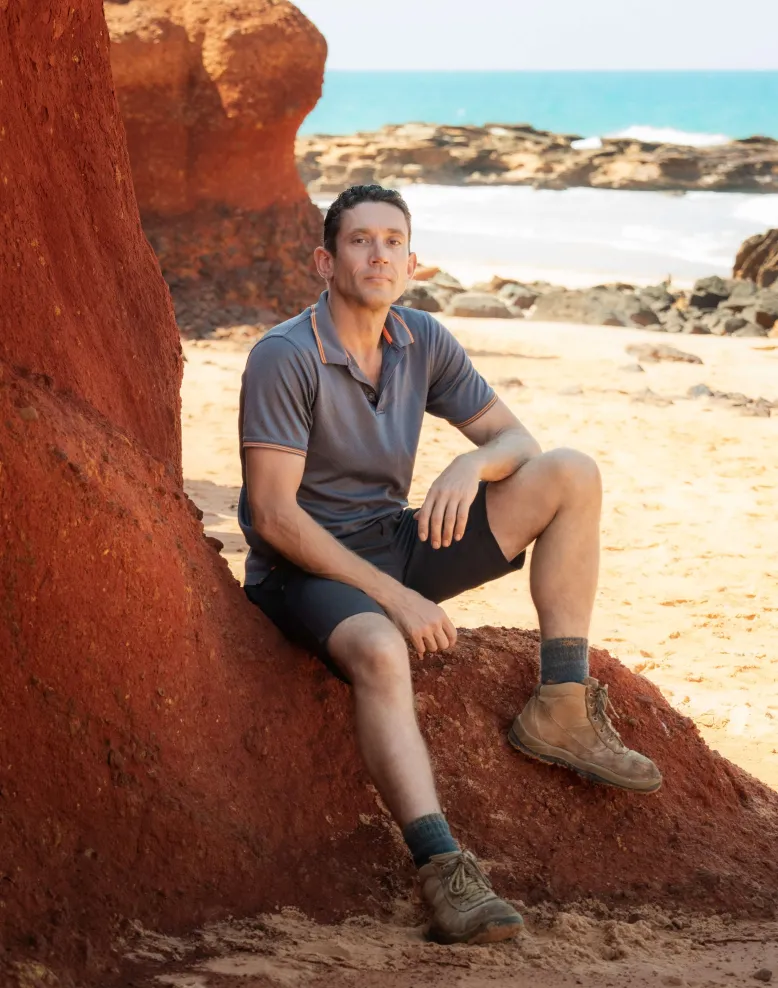
Photographer Kane McLatchie. Credit: Kane McLatchie.
“I left Victoria because it was a bit boring, weather-wise, and I moved to Broome just to chase storms,” he said.
“I’ve just had a ball every wet season, I’m in my element here.
“To be honest, I'm probably one of the more dedicated people in Broome who will get to every storm irrespective of if I've had sleep or eaten, or anything,” he said.
Now that he lives in Broome, Kane has a greater understanding of the impact of weather on everyday life.
“Weather is one of the biggest contributing factors to what you can do day in, day out,” he said.
“You can get extensive flooding right throughout the wet season, roads get blocked and transportation stops.”
But being able to experience the power of mother nature first hand is the number one drawcard.
“The fury of some of these storms is just pretty exhilarating and breathtaking, standing there, watching them.
“To be able to capture them on camera is something you can look back on and show appreciation for some of the storms, because in the moment you've got a fair bit adrenaline going and you sort of forget what happened.
“Then you go through your photos and you're like oh yeah, that was awesome!
“You get to continually share the moment with other people, and yourself.”
Order your copy of the 2026 Australian Weather Calendar now at https://shop.bom.gov.au/