
Tornadoes in Australia
When you think of tornadoes, do you picture the dramatic footage of tornadoes (also known as twisters) from the United States? Well, tornadoes happen in Australia too, and they're more common than you might think!
In the cooler months, strong cold fronts and low pressure systems sweep across southern Australia. They bring bursts of wind and rain, sometimes severe. High pressure systems then follow, bringing periods of relatively calm weather.
These cold fronts will occasionally bring short bursts of intense, violent weather in the form of tornadoes. This type of tornado generally occurs during May to September. But they can develop any time of year under the right conditions.
What is a cool-season tornado?
Cool-season tornadoes are rotating columns of air that move across the ground at 50 km/h to 80 km/h.
They can create a path of damage anywhere from less than a kilometre to several kilometres long.
The damage path is also usually very narrow, about 20 m to 50 m wide but sometimes can be 100 m to 150 m wide.
Also known as 'coldies', these tornadoes live by the creed 'live fast and die young'.
They differ from US tornadoes, which can last for hours and travel hundreds of kilometres, usually during the warmer months.
Our cool-season tornadoes form and collapse in the space of about 10 to 30 minutes. But in that short time, they can still create plenty of damage.
South-west Western Australia is one of the more tornado-prone regions in the world.
There are 5 to 6 reports of tornadoes there each cool season. But the true number across southern Australia is likely much higher. Many tornadoes go unreported.
There have also been occasions when several tornadoes have occurred on the same day.
Tornado damage
The damage tornadoes can create along their path can be devastating. Insurance losses from some coldies run into millions of dollars.
On 10 May 2024, a tornado developed within a severe thunderstorm over Bunbury, Western Australia. It damaged over 200 properties in South Bunbury, Withers and College Grove.
On 31 July 2010, a tornado tore through Penola in south-east South Australia. In only one minute, the tornado damaged more than 40 buildings as it crossed the town.
On 16 May 2005, there were insured losses of $50 million after a tornado moved through the Perth suburb of Bicton.
On 22 September 1993, a tornado demolished 8 houses in Mandurah, Western Australia. It damaged another hundred.
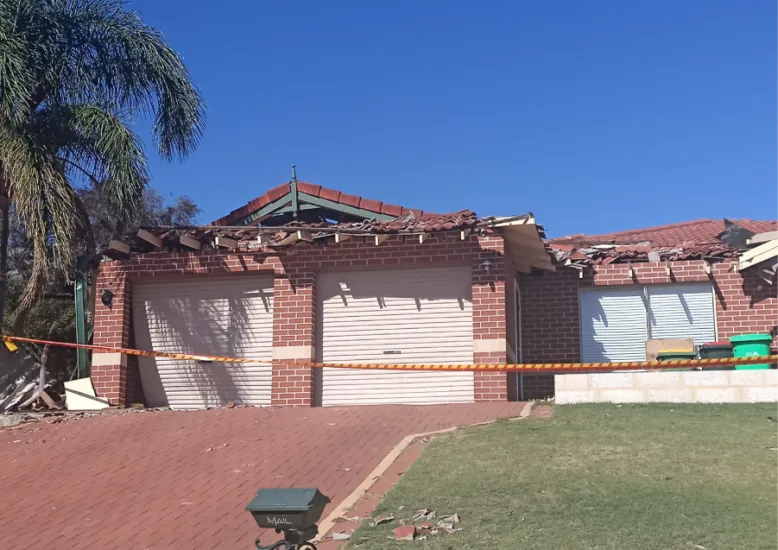
Tornado damage in College Grove, Western Australia, 10 May 2024. Credit: Gianni Colangelo.
Forecasting cool-season tornadoes
Our forecasters can identify broad areas where cool-season tornadoes could potentially form.
But it's very hard for us to predict exactly where in this area tornadoes might occur. This is because they're so short-lived and localised. They can even be difficult to identify on radar, due to their small size.
A cold front generally has the ingredients needed for a cool-season tornado to form. But things need to be just right for it to happen.
The 3 key factors are:
- low-level wind shear – when wind speed or direction changes between the ground and about 1 km up
- unstable air which rises to form tall storm clouds
- a lifting mechanism, usually a cold front, to start cloud development.
If these conditions exist at the same time in the same place, there is a chance that a cool-season tornado will form.
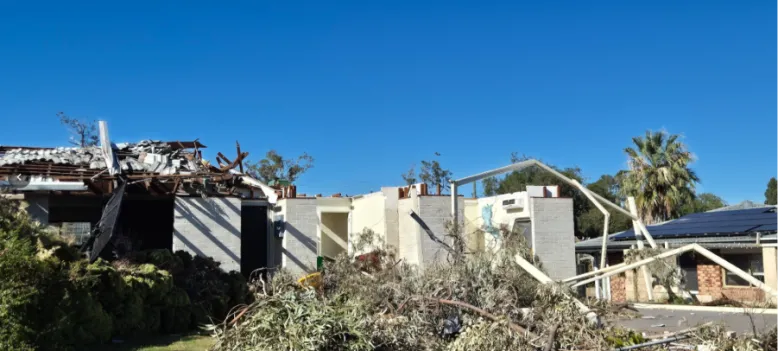
Tornado damage in Withers, Western Australia, 10 May 2024. Credit: Robert Lawry.
Warning for tornadoes
Warnings for tornadoes are issued as part of a severe thunderstorm warning:
- if a tornado is likely to form
- when there is strong radar evidence that a tornado may be occurring, or
- after a confirmed observation.
We still rely heavily on seeing the storms develop on the radar. This is why saying exactly when and where a tornado may hit with advance warning remains a challenge. So, you should always be prepared when a severe thunderstorm warning has been issued.
Keep an eye out for warnings in your location.
Has the number of cool-season tornadoes increased?
The number of cool-season tornado reports has increased. But there is no evidence to suggest that there are more tornadoes happening.
We hear about them more often in the media and social media thanks to population spread.
Assessing cool-season tornadoes
When a severe storm sweeps through, many people want to know what type of storm it was.
Significant damage doesn't always mean a tornado has occurred. Other storms can be just as destructive. It's the way the damage is spread that helps our forecasters work out what happened.
Tornadoes can generally be identified by their distinct, narrow paths of destruction. This can create sharp boundaries in their pattern of damage. For example, one house can be severely impacted or destroyed. A neighbouring house could remain untouched.
We may also be able to assess radar or satellite images and video footage to verify a tornado occurrence.
It's not always possible to determine the exact type of storm. In some cases, there isn't enough clear evidence available.
What's important to remember is that all severe thunderstorms can be dangerous.