
When most people think of Antarctica, they picture vast ice sheets, extreme cold and the aurora blazing across the sky. It is a special few who imagine it as a workplace.
Yet every year, people from all walks of life head south to call the frozen continent home. Together, they keep research stations running in one of the most remote and challenging environments on Earth.
Deborah (or Deb to her friends) is one such person. Deb landed at Mawson station for her first winter as a technical officer with her friend and colleague Dan.
Meet Deb
For many expeditioners, arriving in Antarctica can feel surreal. It's not often you get dropped home on a boat or helicopter after all. Despite the change in scenery and harsh conditions, daily life quickly settles into a routine.
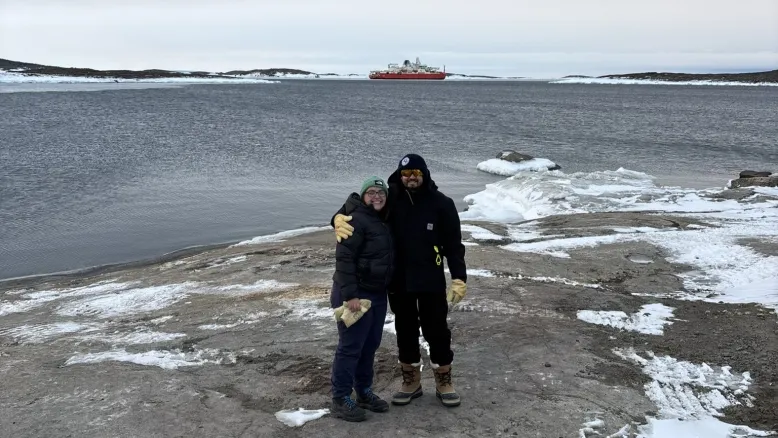
Deb and Dan stand together as Nuyina, the icebreaker ship, departs Mawson station. They won't see the ship again for at least 12 months.
'People are often surprised to learn how normal many aspects of station life become,' Deb says. 'You still go to work, eat meals with friends, and find ways to relax after hours.'
There are a few unspoken rules though, she says. 'You're essentially living in the ultimate share house, so taking each other into consideration plays a big part in your time together. Things like slamming doors or forgetting to fill up the milk after you drink it can make a big difference among your team.'
Deb's journey so far
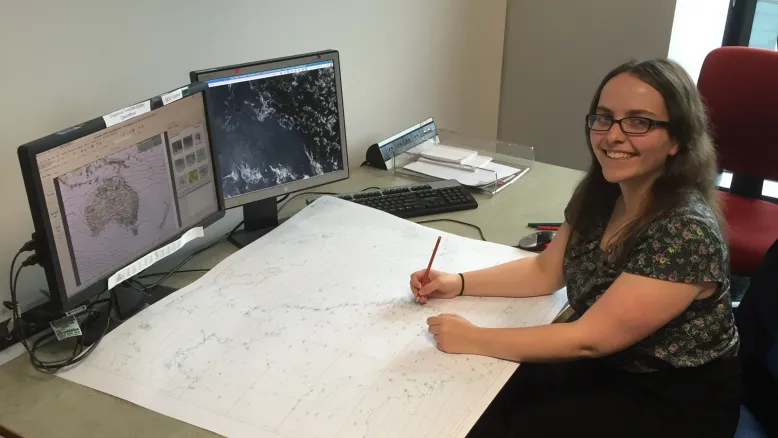
Deb studies up as part of the graduate meteorologist program in 2015
Deb joined the Bureau of Meteorology as a graduate meteorologist in 2015. After gaining experience, she applied for a meteorologist position in Antarctica for the summer season in 2017–18.
Her hard work and dedication paid off, and over the next 8 years she spent 4 summer seasons at Casey and Davis stations.
But she wanted more. Deb applied for the longer 'winter season' technical officer posting, which involves roughly 12 months down south. After 6 months of training in Melbourne and Hobart, she joined Mawson station as a weather observer and technical officer. 'And I haven't looked back', she says.
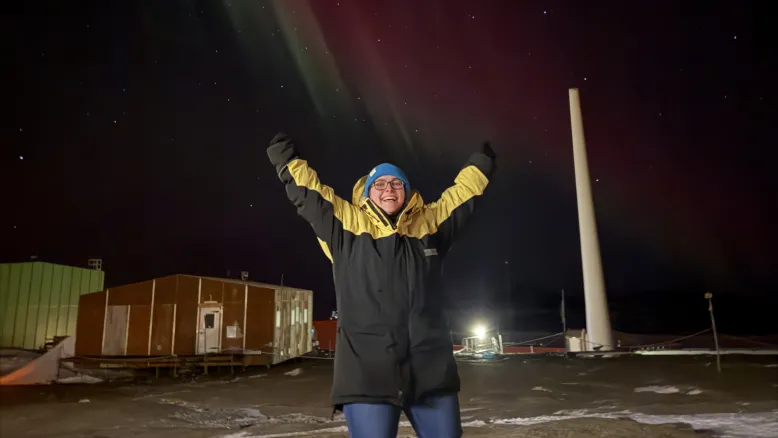
Deb shouts for joy as the vibrant aurora australis streaks across the sky above her
Moments of a lifetime
Antarctica is unlike anywhere else on Earth. Freezing temperatures and 60-knot winds (roughly 110 km/h) are routine.
When asked about her favourite part of life in Antarctica, Deb said she 'loves seeing how the weather changes constantly with a ferocious blizzard one day, then clear skies and a stunning aurora the next.'
Deb has made the most of her time, joining field excursions and participating in the mid-winter swim. While there are extensive safety precautions in place, it wasn't as cold as she expected. 'Surprisingly, the air is actually the hardest part, since the water is only −1 °C while the air above the water is −20 °C.' she says.
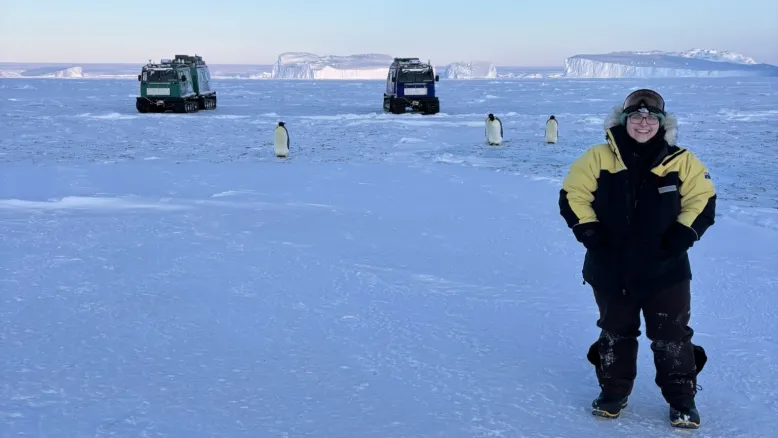
Deb sees Emperor penguins for the first time
Work around station
Workdays vary dramatically depending on your job.
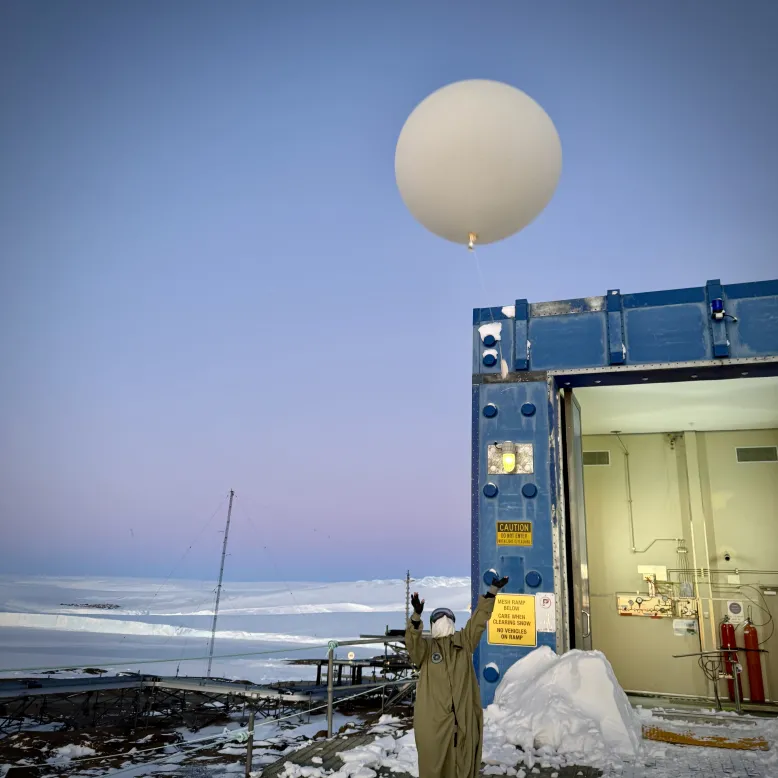
Deb releases a weather balloon at Mawson Station as part of her role as a technical officer. These provide essential data that underpins weather forecasting, climate monitoring and public safety worldwide.
Scientists might spend their days collecting data in the field, while electricians, chefs, plumbers and a host of other people work to keep the station and its people functioning smoothly.
During her summer seasons as a meteorologist Deb was up early each day forecasting critical weather conditions for everyone on the station. Then in the evening she'd have dinner with the pilots and other people at the station who used her forecasts that day.
Now, as a technical officer, she completes the manual weather observations and helps maintain the critical equipment that feeds into those weather forecasts.
More than just work
Beyond work, everyone living at the station turns into a little family. This is especially true of the winter crew, when the number of expeditioners shrinks to a fraction of what each station can host.
Movie nights, trivia competitions, gym sessions and shared celebrations help everyone build strong bonds and support each other. Deb says this year they're 'building a Lego Hogwarts castle together'.
There's also lots of other ways to stay occupied by yourself or with friends while on station. One of Deb's favourite places to spend time at Mawson is the hydroponics hut, where they grow fresh produce like cucumbers, tomatoes and other vegetables. 'I spend quite a bit of time on my days off in there,' she says. 'It's a really nice environment because it's high humidity, warmer temperatures and you can just hang out with plants and the different smells you get.'
Surviving the cold and wind
The environment itself never stops shaping daily experiences. Deb said one of her more memorable 'I'm not in Kansas anymore' moments was during a station-wide power outage and fire alarm in the middle of winter – fortunately there was no fire. 'It was a blizzard outside', she said. 'The thought of going out into the freezing winds as a member of fire team made me remember that despite how comfortable it is – you and your team are ultimately responsible for keeping yourselves safe.'
Yet these challenges are often what make the experience memorable. Like many expeditioners, Deb talks about the profound sense of perspective gained from living in Antarctica. Removed from the distractions of modern life, expeditioners often develop a renewed appreciation for nature and community.
For those fortunate enough to spend time there, Antarctica is more than just a bucket-list destination. It's a place that leaves a lasting impression long after the journey home.
Advice to applicants
Becoming an Antarctic expeditioner isn't always easy. But Deb had a few suggestions for anyone who wants to go. First and foremost, she said 'Throw your hat in the ring – and if you don't get it first try then ask lots of questions and seek feedback'.
She also said that one way to strengthen your application as a technical officer is to look at the Introduction to Meteorology course. 'Not everyone thinks of it but having a proven understanding of weather forecasting can fill a gap in your résumé for a role which supports forecasters'.