
After a cold and clear night, you may sometimes feel the familiar crunch of frost underfoot. From late autumn to early spring, frost is a common visitor to southern and central Australia. It can create beautiful wintry scenes, but gardeners and agricultural producers can dread the season's first frost. So, what is frost, and how can you prepare for it in winter?
What is frost?
Frost is a deposit of soft white ice crystals or frozen dew drops on objects near the ground. It forms when the temperature at ground level falls below the freezing point (0 °C or less).

What conditions make frost likely?
A range of factors determine if and where frost occurs, including:
- temperature
- cloud coverage
- humidity
- wind
- the slope of the land
- geographic location.
Frost is most likely to form under a clear sky, with little or no wind, especially after the passage of a cold front. Why is this?
- Cloud cover: clouds act as a 'blanket', preventing daytime warmth from escaping during the night. Clear skies mean the heat is free to escape, allowing for lower overnight temperatures.
- Wind: wind mixes the cooler air near the ground with warmer air just above it. Little to no wind means it stays cooler on the ground.
- Humidity: frost only forms when there is enough moisture in the air to turn into solid ice crystals. If the temperature is cold but the air is dry, it is harder for frost to form.
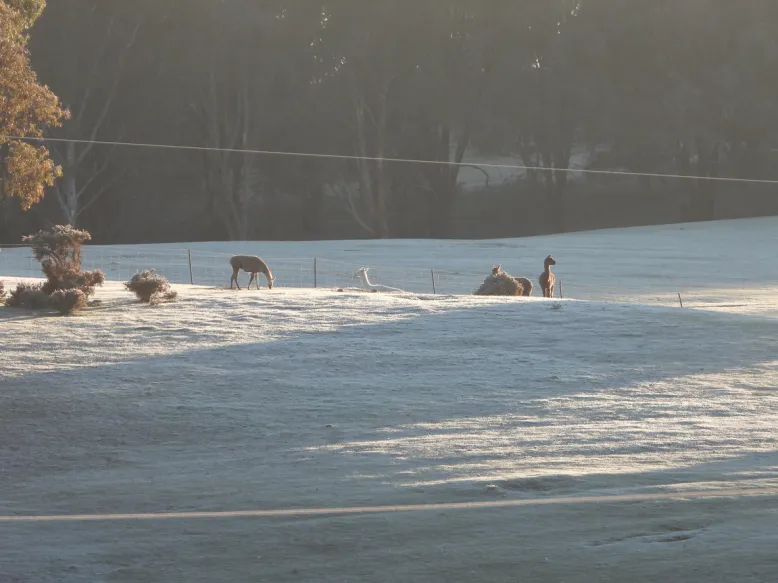
A frosty scene in regional Victoria
Where and when does frost occur?
Frost is most common in southern and central Australia. At low elevations in mainland Australia, it can generally occur from late autumn to early spring. The frost season is much longer at higher elevations and in Tasmania. In alpine regions and higher parts of inland Tasmania, frost can occur at any time of year.
Frost varies in severity across the landscape. Some areas, known as frost hollows, are particularly frost-prone. These are often in valleys where cold air sinks down the slopes and pools in low-lying areas.
The potential frost days maps show areas that frost may affect. The map below shows the annual average number of days where the minimum air temperature falls below 2 °C. (However, this map is for frost frequency for the 30 years centred on the mid-1990s. We know that minimum air temperatures have increased over Australia since then.)
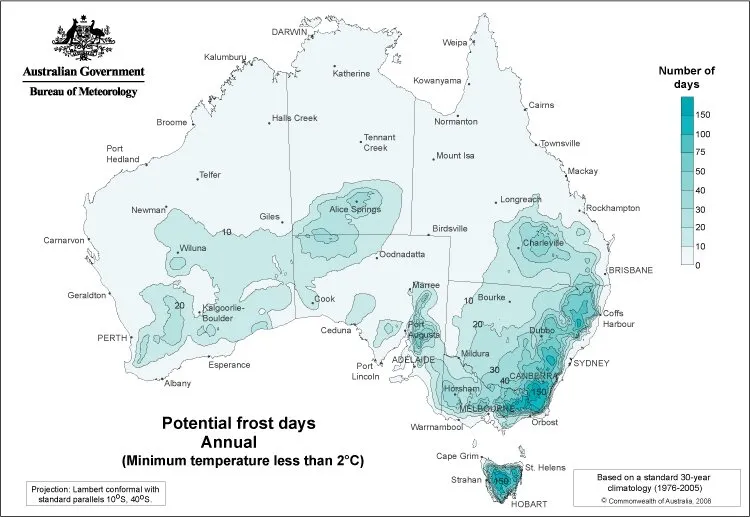
Average annual number of potential frost days across Australia based on a standard 30-year climatology (1976 to 2005)
What is the impact of frost?
Frost can have a devastating effect on vegetation. Ice forms on the surface of plants and also freezes their internal cells. These ice crystals can expand and rupture delicate plant tissue.
The extent of damage depends upon frost severity (how quickly the temperature drops to 0 °C and the length of time it stays below it). Other things that can determine the extent of damage from frost include:
- plant type
- variety
- sowing date
- nutrition
- stage of growth.
Frost damage costs Australian agriculture millions of dollars each year. A series of frosts in mid to late September 2016 affected parts of south-west Western Australia. It caused devastating damage to crops, with losses of up to 90% for some growers.
Frost can also pose a safety risk on the road, particularly at night and in dips or low-lying areas, where ice may form.
What to look out for in the forecast
We use an air temperature of 3 °C or below as an indicator for frost. But it actually needs to be 0 °C or less at ground level for frost to form. Why the difference? We measure air temperature slightly above ground, which is typically warmer than the temperature at ground level.
What frost forecasts and warnings are available?
There are many ways to see frost warnings, forecasts, and information about frost potential on our website and app.
- Frost warnings (Tasmania, Victoria and South Australia only): Warning about conditions likely to cause significant damage to frost-sensitive plants, 12 to 24 hours ahead.
- Frost forecasts (MetEye): Forecasts in map or text format which include information about frost when the right conditions occur and the forecast air temperature is 3 °C or below, for every 3-hour period over the next 7 days
- Temperature forecasts (BOM Weather app): View an hourly temperature forecast for the next 3 days, or a daily forecast for the next 7 days, to see when frost is likely (look for forecast minimum air temperatures of 3 °C or below).
You will also see frost appear in text forecasts, available via our website and the BOM Weather app.
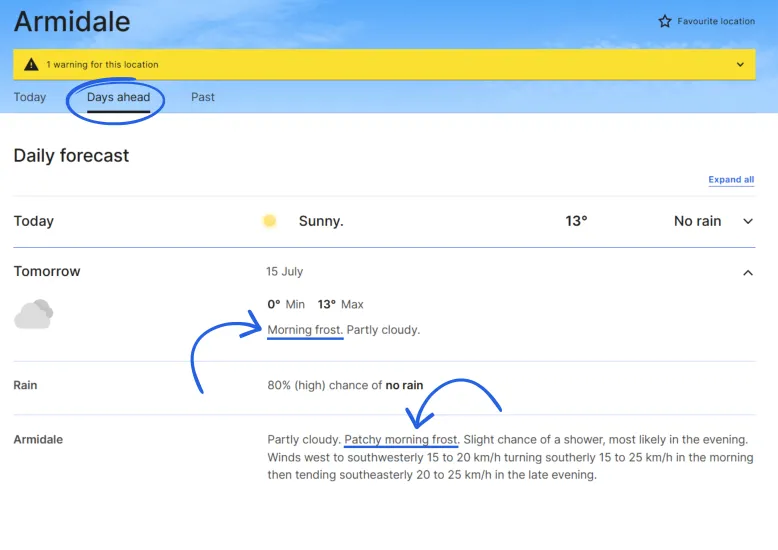
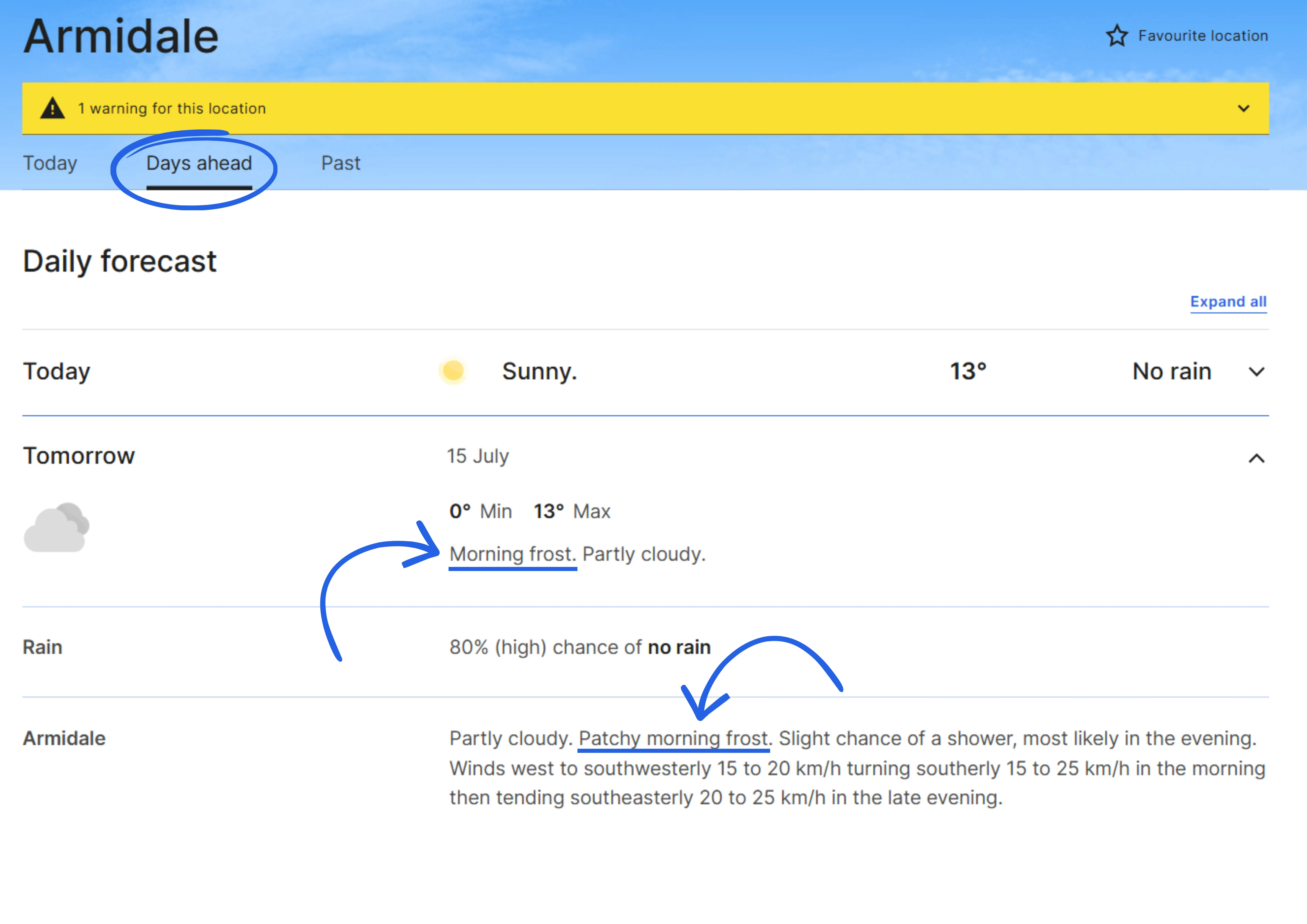
Watch for frost in the short-form forecast and the longer-form forecast. To allow people to plan ahead, we include frost on all seven days of the forecast.