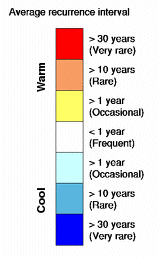
Average recurrence intervals are a way of explaining how rare an event is, by comparing how often, on average, the particular event of interest has occurred in the past - more than once a year, more than once a decade and more than once in 30 years. In this case, average recurrence intervals are calculated by comparing the rainfall temperature observations on the day you select with all the rainfall and temperature data for that month in the climate record.
It can sometimes be easier to think of average recurrence intervals in qualitative terms, using words to describe how rarely an extreme event occurs (see example key on the right). If you read a temperature map using the worded key, any area shaded red on the map has experienced a very rare warm event for that month, an event that on average, in the past has occurred at intervals of more than 30 years apart for that month. Likewise, any area shaded dark blue has experienced a very rare, cool event for that month. The rainfall maps can be read in a similar way, a >30 year rain event is very rare, a >10 year rain event is rare, and a >1 year rain event happens occasionally. Any areas not coloured have experienced normal or typical conditions - nothing extreme or unusual and occur frequently.
This worded key is not based on a recognised standard; it's simply a rough guide to help you read the maps.
Read more about climate extremes maps.