
What causes drought?
Most simply, drought happens in Australia when there's not enough rain.
Australia is prone to drought because of its geography. Our climate zones span latitudes from tropical to temperate regions.
In the middle latitudes is a high-pressure belt – the subtropical ridge. This usually brings dry, stable air and clear skies.
It means most of the country has low and variable rainfall. Even in the wetter areas, very dry years can disrupt normal activities and lead to water shortages.
Climate factors in drought
A lot of our rainfall variation, but not all, can be explained by what's happening in the global climate system.
Many different factors affect Australia's climate patterns. Several climate factors can affect Australian rainfall variability for a month or more. Sometimes these work together, boosting their effect.
El Niño–Southern Oscillation
Phases include El Niño and La Niña, which can especially affect rainfall in winter and spring over eastern Australia.
Indian Ocean Dipole
The Indian Ocean Dipole can affect rainfall in winter and spring, from the north-west to the south-east of the country.
Australian monsoon
The monsoon can bring long periods of heavy rainfall to northern Australia during the wet season from November to April.
Climate change
Climate change is altering how weather patterns affect our climate. This has reduced the average rainfall in areas of southern Australia. Learn about climate change and drought.
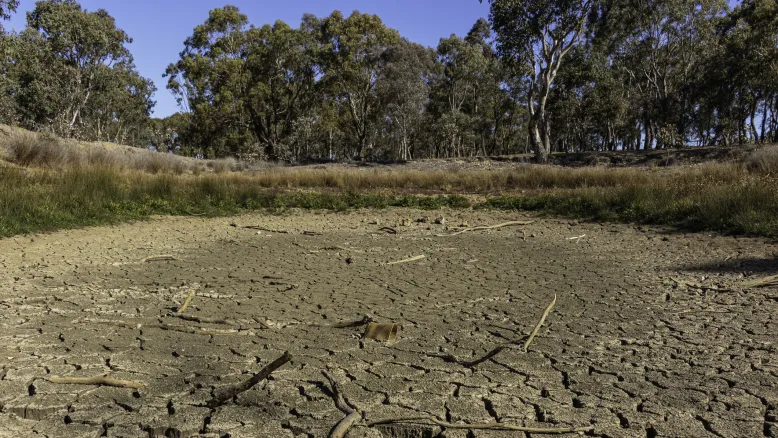
Australia is prone to drought. Even in the wetter areas, very dry years can disrupt normal activities and lead to water shortages.
Types of drought
Generally, there are several types of drought. Their impacts are measured in different ways and across different timescales.
Flash drought
Flash droughts can happen when rainfall decreases rapidly, and other weather factors contribute to drying. For example:
- high temperatures
- low humidity
- strong winds
- clear skies.
Flash drought can be measured over weeks.
Meteorological drought
Climatologists monitor the extent and severity of drought in terms of rainfall deficiencies, or shortages, compared to average rainfall for the period. This can be measured over months.
Hydrological drought
Hydrologists examine:
- soil moisture
- river flows
- water storage levels in dams
- groundwater levels.
This can be measured over years.
Agricultural drought
Agriculturalists rate the impact of rainfall deficiencies on primary industries.
Socioeconomic drought
Sociologists define drought by:
- social expectations and perceptions
- impact on the community.
Breaking a drought
A drought isn't over until people have enough water to meet their needs. This means there's no specific amount of rain that is 'drought breaking'. It depends on the average rainfall and water use in each area.
Sometimes it can take many months of above-average rainfall before enough water is available. There may be enough rain to keep a flush of green growth in the landscape, but the underlying soil may be too dry to grow enough pasture. This is sometimes called a 'green drought'.
Or there may be sufficient rain at the right time of year to grow a crop, but not enough to replenish water storages.